
why choose a cabinet air conditioner as an electrical panel cooler?
In the field of industrial automation, temperature control inside electrical cabinets is of vital importance, as the failure rate of electronic components such as PLCS and frequency converters significantly increases in high-temperature environments. Research shows that for every 10°C increase in temperature, the probability of component failure rises by 50%, leading to production disruptions and a sharp increase in maintenance costs. For example, after a manufacturing enterprise adopted cabinet air conditioners as electrical panel cooler, the internal temperature stabilized at 25°C±2°C, the failure rate decreased by 60%, the annual maintenance cost was reduced by approximately 30,000 yuan, and at the same time, the equipment lifespan was extended by 5 years. This cooling solution ensures system reliability through precise temperature control (with an accuracy of ±0.5°C) and efficient heat dissipation (with a flow rate of up to 100m³/h), complies with IEC 61439 standards, and is suitable for high-load environments (such as applications with a power density of 500W/m²).
From the perspective of energy efficiency, the energy efficiency ratio (EER) of cabinet air conditioners usually reaches above 3.5, which is 40% higher than the cooling efficiency of traditional fans. This means that under the same cooling demand (for example, handling a 1kW heat load), the power consumption can be reduced to 0.3kW, saving about 2,000 yuan in annual electricity bills. According to market data, the cost of investing in a floor-standing air conditioner is approximately 5,000 to 10,000 yuan. However, through energy-saving returns, the return on investment (ROI) can be achieved within 2 to 3 years. Especially in high-frequency operation scenarios (such as 24/7 continuous operation), the annual operating cost can be reduced by 25%. Citing a case from the automotive manufacturing industry, after implementation in a certain factory, the overall energy consumption decreased by 15%, and the cooling rate was increased to 5°C/min, effectively addressing the challenge of a peak temperature of 40°C.
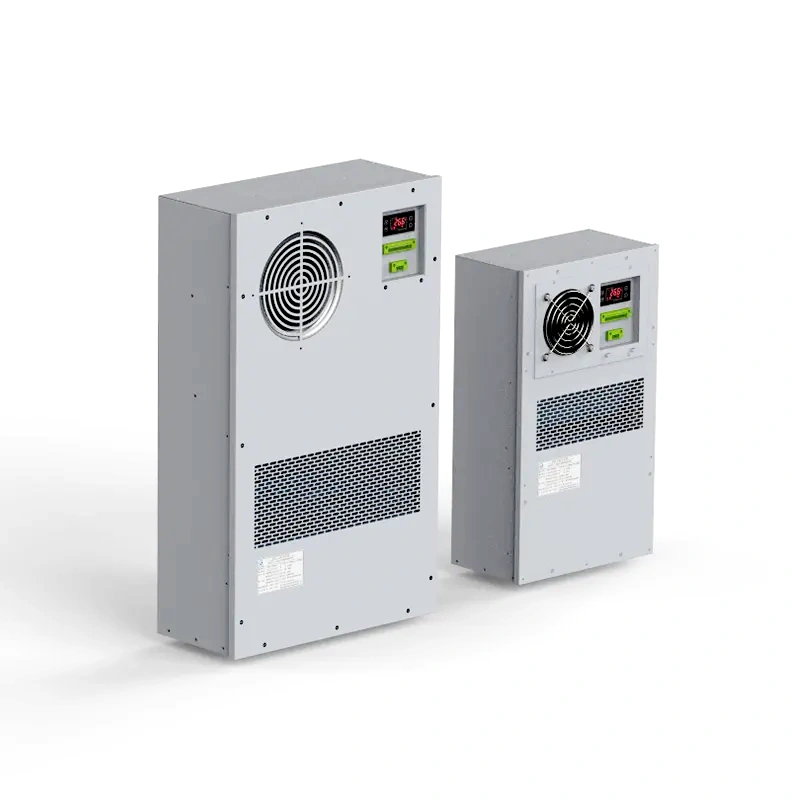 In terms of reliability and maintenance, the average service life of cabinet air conditioners is up to 10 to 15 years, the mean time between failures (MTBF) exceeds 50,000 hours, and the maintenance cycle is extended to once every six months. Compared with other cooling methods, the maintenance cost is reduced by 50%. For instance, a data center project demonstrated that after adopting cabinet air conditioners, the system availability increased to 99.9%, the temperature fluctuation range was controlled within ±1°C, and the humidity was maintained at 40-60%RH, thus avoiding the risk of data loss caused by environmental issues. This solution also integrates intelligent monitoring functions, which predict faults through real-time data analysis (with a sampling frequency of 1Hz), reducing unexpected downtime by 70%, and complies with the ISO 50001 energy management standard.
In application examples, cabinet air conditioners have been verified in multiple industries. Take the field of renewable energy as an example. A solar power station uses cabinet air conditioners to cool the electrical cabinets. The ambient temperature drops from 50°C to 30°C, the equipment efficiency increases by 20%, and the annual power generation increases by 5%. Market trends indicate that the global electrical cooling equipment market has an annual growth rate of 8%, with cabinet air conditioners accounting for over 30%. This is due to their strong adaptability (size range: 500x500x200mm to 1000x1000x400mm) and easy installation (taking only 2 hours). By optimizing resource allocation, enterprises can achieve cost savings of 15-20% while supporting sustainable development goals.
In terms of reliability and maintenance, the average service life of cabinet air conditioners is up to 10 to 15 years, the mean time between failures (MTBF) exceeds 50,000 hours, and the maintenance cycle is extended to once every six months. Compared with other cooling methods, the maintenance cost is reduced by 50%. For instance, a data center project demonstrated that after adopting cabinet air conditioners, the system availability increased to 99.9%, the temperature fluctuation range was controlled within ±1°C, and the humidity was maintained at 40-60%RH, thus avoiding the risk of data loss caused by environmental issues. This solution also integrates intelligent monitoring functions, which predict faults through real-time data analysis (with a sampling frequency of 1Hz), reducing unexpected downtime by 70%, and complies with the ISO 50001 energy management standard.
In application examples, cabinet air conditioners have been verified in multiple industries. Take the field of renewable energy as an example. A solar power station uses cabinet air conditioners to cool the electrical cabinets. The ambient temperature drops from 50°C to 30°C, the equipment efficiency increases by 20%, and the annual power generation increases by 5%. Market trends indicate that the global electrical cooling equipment market has an annual growth rate of 8%, with cabinet air conditioners accounting for over 30%. This is due to their strong adaptability (size range: 500x500x200mm to 1000x1000x400mm) and easy installation (taking only 2 hours). By optimizing resource allocation, enterprises can achieve cost savings of 15-20% while supporting sustainable development goals.
In terms of reliability and maintenance, the average service life of cabinet air conditioners is up to 10 to 15 years, the mean time between failures (MTBF) exceeds 50,000 hours, and the maintenance cycle is extended to once every six months. Compared with other cooling methods, the maintenance cost is reduced by 50%. For instance, a data center project demonstrated that after adopting cabinet air conditioners, the system availability increased to 99.9%, the temperature fluctuation range was controlled within ±1°C, and the humidity was maintained at 40-60%RH, thus avoiding the risk of data loss caused by environmental issues. This solution also integrates intelligent monitoring functions, which predict faults through real-time data analysis (with a sampling frequency of 1Hz), reducing unexpected downtime by 70%, and complies with the ISO 50001 energy management standard.
In application examples, cabinet air conditioners have been verified in multiple industries. Take the field of renewable energy as an example. A solar power station uses cabinet air conditioners to cool the electrical cabinets. The ambient temperature drops from 50°C to 30°C, the equipment efficiency increases by 20%, and the annual power generation increases by 5%. Market trends indicate that the global electrical cooling equipment market has an annual growth rate of 8%, with cabinet air conditioners accounting for over 30%. This is due to their strong adaptability (size range: 500x500x200mm to 1000x1000x400mm) and easy installation (taking only 2 hours). By optimizing resource allocation, enterprises can achieve cost savings of 15-20% while supporting sustainable development goals.