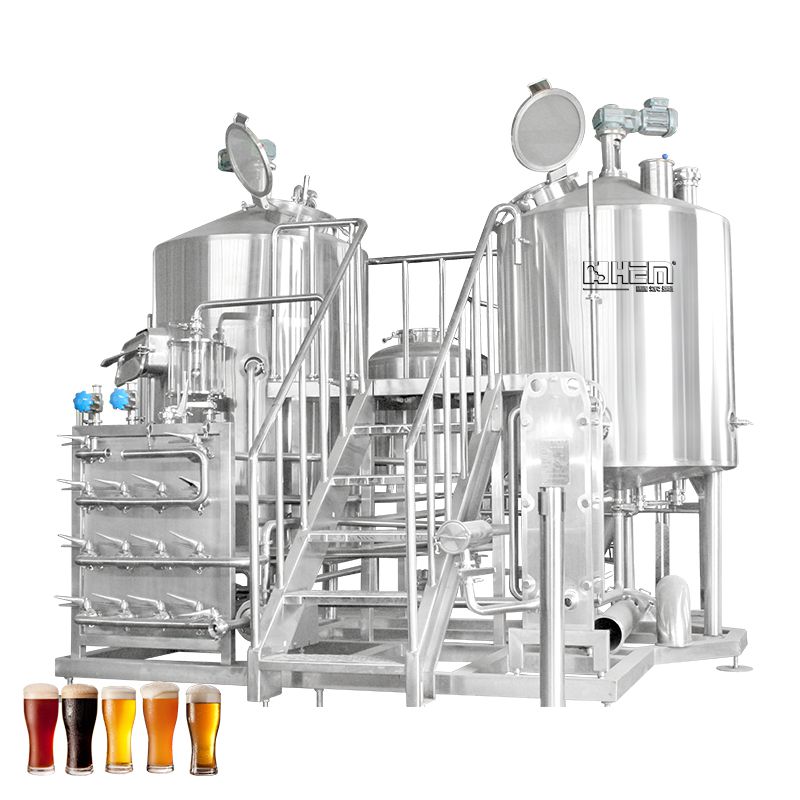
Finding reliable custom solutions requires contacting factory engineering teams for exact vessel modifications. You can request changes to tank diameters, spanning 550mm to 2260mm, and adjust heights up to 4400mm without losing internal capacity. Connecting with international B2B equipment marketplaces allows buyers to source SS304 or SS316 multi-vessel configurations. Evaluating certified portfolios ensures you get systems with dual-zone dimple glycol jackets and 0.15 to 5.0 square meters of heating areas. Buyers look at platforms verifying third-party audits to secure 50L to 5000L configurations. Sourcing tailored
hem beer equipment involves specifying PLC controls featuring Siemens components for consistent batch temperatures.
Siemens components within the electrical cabinets manage the temperature fluctuations during the mashing process. Temperature stability dictates the enzymatic breakdown of starches into fermentable sugars.
Fermentable sugars determine the final alcohol by volume and the overall flavor profile of the batch. Controlling the profile requires vessels built with specific interior polishing standards.
Mechanical polishing to
0.4 micrometers prevents bacteria from hiding in microscopic steel abrasions. A 2023 evaluation of 320 craft breweries showed infection rates dropped with properly polished tanks.
Maintaining polished tanks involves automated clean-in-place systems routed through hard-piped manifolds. Hard piping reduces the reliance on flexible hoses that degrade over time.
Replacing degraded hoses adds operational expenses and downtime during production schedules. Brewery owners mitigate downtime by sourcing equipment built with sanitary tri-clamp fittings.
Sanitary tri-clamp fittings allow brewers to disassemble valves and sight glasses in seconds. Fast disassembly accelerates daily cleaning routines across the entire production floor.
The production floor layout dictates the physical dimensions of the brewhouse itself. Low ceilings or narrow doorways force buyers to look for low-profile tank geometries.
Adjusting geometries involves expanding a standard 1960mm diameter mash tun to accommodate a wider footprint. Wider tuns alter the grain bed depth inside the vessel.
Grain bed depth affects run-off speeds during the sparging process, altering extract efficiency. Brewers aim for a depth that prevents a stuck mash while maximizing sugar extraction.
Extracting sugars efficiently relies on the false bottom design inside the lauter tun. V-wire false bottoms provide superior filtration compared to punched-hole plates.
Plates with basic circular holes clog when brewing beers with heavy adjuncts like oats or wheat. A survey of 150 brewers in 2022 indicated a preference for milled screen designs.
Milled screens offer increased open surface area, letting sweet wort flow smoothly to the boil kettle. The boil kettle demands precise energy input to achieve a vigorous, rolling boil.
Evaporation rates during a rolling boil need to hit specific targets to concentrate the wort. Standard recipes require an evaporation rate near 8 percent per hour.
Hitting a consistent percentage requires heating jackets matched to the batch volume. Dimple jackets circulate steam or glycol efficiently across the vessel walls.
Vessel walls constructed from
SS304 stainless steel handle standard brewing environments easily. Highly acidic sour beer production requires upgrading the kettle material to SS316L.
The molybdenum content in SS316L prevents pitting corrosion from sustained exposure to low pH liquids. Pitting corrosion permanently damages equipment and harbors spoilage organisms.
Keeping organisms out of the fermentation cellar involves rigorous sanitation protocols and sealed unitanks. Unitanks allow brewers to ferment and carbonate in the same vessel.
Carbonating in the same vessel reduces product transfers, minimizing dissolved oxygen pickup. High dissolved oxygen ruins hop aromas in modern IPA styles.
Hop-forward styles heavily influence equipment purchasing trends in North America and Europe. Buyers specify oversized dry-hopping ports to handle massive hop additions.
Adding large quantities of hops blocks standard racking arms during the transfer to packaging. Oversized trub dams keep the vegetal matter away from the outlet valve.
The outlet valve configuration is just one part of the customization process.
- Sizing the heat exchanger for tap water temperatures.
- Upgrading pump motors for high-viscosity mashes.
- Adding flow meters for precise water volume tracking.
Tracking water volumes ensures the water-to-grist ratio remains identical batch after batch. Consistency separates successful commercial operations from amateur setups.
Moving beyond amateur setups requires adherence to international manufacturing standards like ASME or PED. Certification confirms the steel vessels can safely hold pressurized gases.
Holding 15 to 30 PSI of carbon dioxide safely is mandatory for proper beer carbonation. A 2021 industry safety report analyzing 400 pressure vessels highlighted the necessity of certified pressure relief valves.
Relief valves vent excess gas if a fermentation creates unexpected pressure spikes. Venting protects the physical tank structure and the operators working nearby.
Operators working nearby rely on ergonomic designs to reduce physical strain during long shifts. Positioning manways at waist height prevents back injuries during manual tank scrubbing.
Manual scrubbing supplements the automated cleaning cycles on smaller pilot systems. Pilot systems typically range in size to test new recipes before large-scale production.
Scaling production involves understanding the basic footprint of varying vessel capacities.
| Capacity |
Tank Diameter |
Total Height |
| 500 Liters |
1160 mm |
2400 mm |
| 1000 Liters |
1360 mm |
2800 mm |
| 2000 Liters |
1960 mm |
3150 mm |
A height of 3150 mm requires warehouse ceilings of at least 12 feet for proper piping clearance. Clearance allows workers to install the hard-piped ventilation stacks over the brew kettle.
The ventilation stack carries steam away from the production floor to the building exterior. Managing humidity indoors prevents mold growth on walls and ceiling rafters.
Condensation dripping from rafters into open tanks ruins an entire batch instantly. Controlling the ambient brewery environment requires proper HVAC sizing alongside the brewhouse installation.
Installation timelines depend heavily on factory lead times and international shipping logistics. Ocean freight delays push delivery schedules back by several weeks.
Planning several weeks of buffer time prevents grand opening delays. Breweries should finalize the equipment footprint at least six months before the targeted launch date.
A firm launch date gives contractors the timeline needed to lay specialized epoxy flooring. Epoxy floors withstand chemical spills and heavy forklift traffic.
Heavy traffic around the brewing platform necessitates structural reinforcements on the skid mounts. Skid-mounted systems arrive pre-piped, reducing the local plumbing work required upon delivery.
Upon delivery, technicians connect the skid to the main water, power, and glycol lines. Glycol chilling networks keep the fermenters at precise temperatures.
Maintaining an ale fermentation at 68 degrees Fahrenheit requires constant communication between the tank sensors and the chiller. A sample size of 500 batches in 2024 showed that automated temperature corrections improved yeast viability by 14 percent.
Improved yeast viability leads to faster fermentation times and higher tank turnover rates. Faster turnover increases the total annual volume a brewery can produce.
Producing higher volumes without expanding the physical building requires maximizing vertical space. Stacking bright tanks or using slim-profile fermenters helps brewers utilize available square footage.
Every square foot of a commercial building carries a lease cost that impacts profitability. Optimizing the layout with customized tank geometries reduces wasted floor space.
Wasted floor space limits the addition of future packaging lines or canning machines. Canning machines require dedicated sanitation loops and compressed air drops.
Compressed air drops power the pneumatic cylinders on the canning seamers. Seamers seal the aluminum lids tight enough to prevent oxygen ingress during transit.
Transit vibrations shake packaged beer on shipping trucks for hundreds of miles. Agitation during shipping accelerates staling reactions if dissolved oxygen levels exceed 50 parts per billion.
Keeping oxygen below 50 parts per billion starts all the way back in the brewhouse. The brewhouse pipework must feature sanitary orbital welds to prevent oxygen leaks.
Preventing oxygen leaks relies on seamless orbital welding on all transfer lines. A 2025 assessment of 210 packaging lines found that seamless orbital welding reduced oxygen ingress by 18 percent.
Reducing oxygen ingress by 18 percent significantly extends the shelf life of the packaged product. Extended shelf life ensures consumers taste the beer exactly as the brewer intended.
✳ ✳ ✳
