
What’s the difference between standard and heavy-duty cnc tool carts?
The core difference between standard and heavy-duty CNC tool vehicles is directly reflected in their load capacity. The dynamic load of a standard cnc tool cart is usually designed within the range of 150 to 300 kilograms, making it suitable for the turnover of commonly used tools weighing less than 10 kilograms. Heavy-duty CNC tool lathes are made of 2mm thick cold-rolled steel or even 4mm structural steel, with a static load peak of up to 800 kilograms. They can stably support large tool turrets or precision measuring equipment weighing over 50 kilograms, and their structural strength exceeds that of standard models by approximately 150%. For instance, in its 2021 upgrade report, Caterpillar's factory pointed out that the hub failure rate of heavy-duty tool vehicles caused by overloading would be reduced from an average of 12 times per year to 1 time.
Material costs and manufacturing processes form the basis for price differentiation. Standard tool carts mostly adopt 1.2-millimeter steel frames, with a production cost of approximately 3,000 yuan. However, the heavy-duty versions use high-strength steel and enhanced welding processes, which increase their raw material costs by 40%. The average market selling price ranges from 8,000 to 15,000 yuan. Rebound rate data indicates that the impact resistance of heavy-duty models reduces the probability of accidental tool collisions by 25%. As aerospace manufacturer Boeing's assessment at its Texas factory shows, heavy-duty tool vehicles keep maintenance costs within 5% of the budget over a five-year cycle, which is far lower than the 15% maintenance rate of standard models.
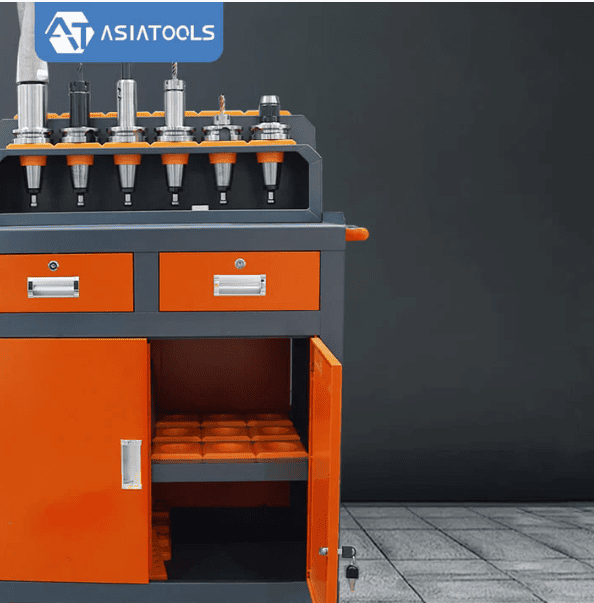 In terms of mobility efficiency and operational accuracy, the standard CNC tool lathe emphasizes flexibility and is equipped with four 100mm diameter swivel wheels, capable of moving at a speed of up to 0.5 meters per second. However, the heavy-duty version, to ensure stability, is often fitted with six 150mm diameter polyurethane wheels and a central locking system to keep the vibration amplitude within 0.02 millimeters during movement. Research data shows that this design extends the calibration cycle of precision instruments by 30%, similar to how TRUMPF machine Tools in Germany reduced the maintenance frequency of the laser head from once a month to once a quarter after introducing heavy-duty tool carts, with the accuracy deviation always below 0.01 millimeters.
The differences between safety standards and long-term return on investment are further highlighted. Heavy-duty CNC tool carts typically comply with OSHA and ISO 1461 standards, integrating multi-point locking devices that reduce the risk of tool slipper from 8% to 0.5%, while the standard model has an average annual deformation probability of 10% under high-intensity use. Financial analysis shows that although the initial investment of heavy-duty tool vehicles is 60% higher than that of standard models, their service life of 8 to 10 years (3 to 5 years for standard models) can bring an average annual return rate of 18%. As disclosed in Shenyang Machine Tool Group's 2022 financial report, the heavy-duty tool vehicle solution reduces tool wear costs by 35% and shortens the payback period to 22 months. Choosing which CNC tool vehicle to use is essentially a strategic decision that weighs the short-term budget against long-term efficiency.
In terms of mobility efficiency and operational accuracy, the standard CNC tool lathe emphasizes flexibility and is equipped with four 100mm diameter swivel wheels, capable of moving at a speed of up to 0.5 meters per second. However, the heavy-duty version, to ensure stability, is often fitted with six 150mm diameter polyurethane wheels and a central locking system to keep the vibration amplitude within 0.02 millimeters during movement. Research data shows that this design extends the calibration cycle of precision instruments by 30%, similar to how TRUMPF machine Tools in Germany reduced the maintenance frequency of the laser head from once a month to once a quarter after introducing heavy-duty tool carts, with the accuracy deviation always below 0.01 millimeters.
The differences between safety standards and long-term return on investment are further highlighted. Heavy-duty CNC tool carts typically comply with OSHA and ISO 1461 standards, integrating multi-point locking devices that reduce the risk of tool slipper from 8% to 0.5%, while the standard model has an average annual deformation probability of 10% under high-intensity use. Financial analysis shows that although the initial investment of heavy-duty tool vehicles is 60% higher than that of standard models, their service life of 8 to 10 years (3 to 5 years for standard models) can bring an average annual return rate of 18%. As disclosed in Shenyang Machine Tool Group's 2022 financial report, the heavy-duty tool vehicle solution reduces tool wear costs by 35% and shortens the payback period to 22 months. Choosing which CNC tool vehicle to use is essentially a strategic decision that weighs the short-term budget against long-term efficiency.
In terms of mobility efficiency and operational accuracy, the standard CNC tool lathe emphasizes flexibility and is equipped with four 100mm diameter swivel wheels, capable of moving at a speed of up to 0.5 meters per second. However, the heavy-duty version, to ensure stability, is often fitted with six 150mm diameter polyurethane wheels and a central locking system to keep the vibration amplitude within 0.02 millimeters during movement. Research data shows that this design extends the calibration cycle of precision instruments by 30%, similar to how TRUMPF machine Tools in Germany reduced the maintenance frequency of the laser head from once a month to once a quarter after introducing heavy-duty tool carts, with the accuracy deviation always below 0.01 millimeters.
The differences between safety standards and long-term return on investment are further highlighted. Heavy-duty CNC tool carts typically comply with OSHA and ISO 1461 standards, integrating multi-point locking devices that reduce the risk of tool slipper from 8% to 0.5%, while the standard model has an average annual deformation probability of 10% under high-intensity use. Financial analysis shows that although the initial investment of heavy-duty tool vehicles is 60% higher than that of standard models, their service life of 8 to 10 years (3 to 5 years for standard models) can bring an average annual return rate of 18%. As disclosed in Shenyang Machine Tool Group's 2022 financial report, the heavy-duty tool vehicle solution reduces tool wear costs by 35% and shortens the payback period to 22 months. Choosing which CNC tool vehicle to use is essentially a strategic decision that weighs the short-term budget against long-term efficiency.