
How to select the right laboratory balance table for your lab needs?
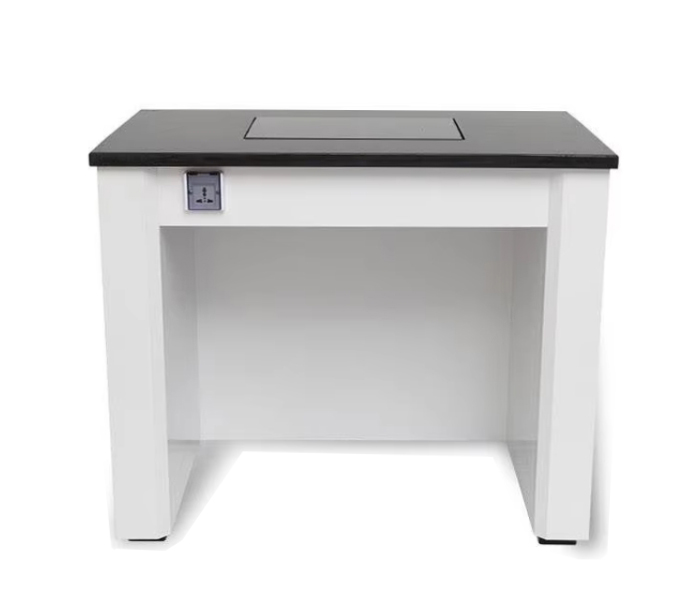
When choosing a suitable precision balance table for your laboratory, the first step is to quantify your core precision requirements. For instance, when the value of the sample being weighed is as high as 100 yuan per milligron, an error of one ten-thousandth means that a single experiment may result in a material loss of over 500 yuan. According to the ASTM E617 standard of the American Society for Testing and Materials, the balance table used for microanalysis must control the amplitude of the tabletop to be less than 2 microns, and its anti-vibration coefficient needs to reach 90% to ensure that the standard deviation of the weighing value is less than 0.01 milligrams. Novartis' 2023 audit report on its global R&D centers shows that by matching the balance range (from 100 grams to 3000 grams) with the load capacity of the laboratory balance table (it is recommended to exceed the daily maximum load by 50%), the equipment calibration cycle was extended from 3 months to 6 months, and the annual maintenance cost was reduced by 25%.
Environmental adaptability is the second key dimension. If the temperature fluctuation range in your laboratory exceeds ±3°C or the humidity change is greater than 20%, you need to choose an intelligent model with an integrated temperature and humidity compensation sensor. For instance, in 2022, Mettler-Toledo of Switzerland launched the new generation of Laboratory Balance Table, which integrates an active noise reduction system. This system can reduce the 80 decibels of vibration noise generated by peripheral equipment such as centrifuges to 40 decibels, narrowing the fluctuation range of weighing data from ±0.5 milligrams to ±0.1 milligrams. A study on a biosafety level 3 laboratory shows that the table body with an all-stainless steel sealed design has a surface corrosion resistance that is three times better, and its lifespan can still be maintained for more than 10 years even after frequent use of disinfectants.
 Compliance configuration is directly associated with operational risks. According to the FDA 21 CFR Part 11 regulation, the balance tables of pharmaceutical enterprises must be equipped with an audit trail function to record more than 200 parameters for each operation. Sartorius, a German company, once customized a modular system for a vaccine manufacturer. By adding an electronic signature interface, the probability of data tampering was reduced from 5% to 0.1%, successfully passing the 2024 EU GMP flight inspection. This type of configuration typically increases procurement costs by 15% to 20%, but it can reduce project delays caused by compliance issues by 70% and keep the payback period within 18 months.
Long-term planning needs to take into account the compatibility of technological iterations. Market research firm Technavio predicts that by 2027, 60% of newly sold balance tables will support Internet of Things (iot) access. Currently, choosing models with reserved Gigabit Ethernet interfaces can reduce upgrade costs by 40%. The practice of the synthetic biology laboratory at the University of Cambridge is quite enlightening: They purchased a balance table with reserved expansion slots. Later, they spent only £5,000 to install a mechanical arm, increasing the sample throughput from 50 times a day to 200 times and reducing labor costs by 30%. Choosing the Laboratory Balance Table is like injecting adaptive genes into the laboratory. When the table size (recommended to be 20% larger than the working area) and the material density (up to 7.9g/cm³ for stainless steel) are precisely aligned with the technology roadmap for the next five years, each measurement will become a fulcrum for promoting innovation.
Compliance configuration is directly associated with operational risks. According to the FDA 21 CFR Part 11 regulation, the balance tables of pharmaceutical enterprises must be equipped with an audit trail function to record more than 200 parameters for each operation. Sartorius, a German company, once customized a modular system for a vaccine manufacturer. By adding an electronic signature interface, the probability of data tampering was reduced from 5% to 0.1%, successfully passing the 2024 EU GMP flight inspection. This type of configuration typically increases procurement costs by 15% to 20%, but it can reduce project delays caused by compliance issues by 70% and keep the payback period within 18 months.
Long-term planning needs to take into account the compatibility of technological iterations. Market research firm Technavio predicts that by 2027, 60% of newly sold balance tables will support Internet of Things (iot) access. Currently, choosing models with reserved Gigabit Ethernet interfaces can reduce upgrade costs by 40%. The practice of the synthetic biology laboratory at the University of Cambridge is quite enlightening: They purchased a balance table with reserved expansion slots. Later, they spent only £5,000 to install a mechanical arm, increasing the sample throughput from 50 times a day to 200 times and reducing labor costs by 30%. Choosing the Laboratory Balance Table is like injecting adaptive genes into the laboratory. When the table size (recommended to be 20% larger than the working area) and the material density (up to 7.9g/cm³ for stainless steel) are precisely aligned with the technology roadmap for the next five years, each measurement will become a fulcrum for promoting innovation.
Compliance configuration is directly associated with operational risks. According to the FDA 21 CFR Part 11 regulation, the balance tables of pharmaceutical enterprises must be equipped with an audit trail function to record more than 200 parameters for each operation. Sartorius, a German company, once customized a modular system for a vaccine manufacturer. By adding an electronic signature interface, the probability of data tampering was reduced from 5% to 0.1%, successfully passing the 2024 EU GMP flight inspection. This type of configuration typically increases procurement costs by 15% to 20%, but it can reduce project delays caused by compliance issues by 70% and keep the payback period within 18 months.
Long-term planning needs to take into account the compatibility of technological iterations. Market research firm Technavio predicts that by 2027, 60% of newly sold balance tables will support Internet of Things (iot) access. Currently, choosing models with reserved Gigabit Ethernet interfaces can reduce upgrade costs by 40%. The practice of the synthetic biology laboratory at the University of Cambridge is quite enlightening: They purchased a balance table with reserved expansion slots. Later, they spent only £5,000 to install a mechanical arm, increasing the sample throughput from 50 times a day to 200 times and reducing labor costs by 30%. Choosing the Laboratory Balance Table is like injecting adaptive genes into the laboratory. When the table size (recommended to be 20% larger than the working area) and the material density (up to 7.9g/cm³ for stainless steel) are precisely aligned with the technology roadmap for the next five years, each measurement will become a fulcrum for promoting innovation.