
How Strong Is Plywood?
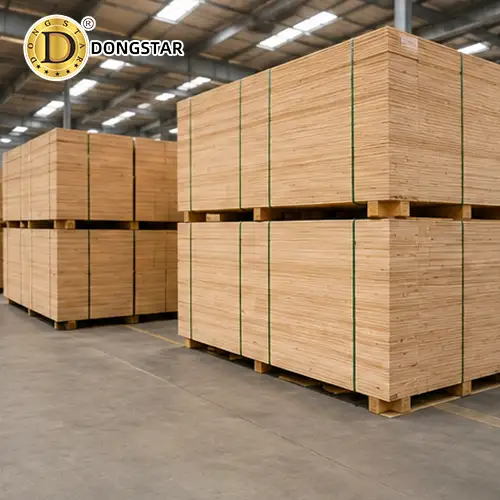
Plywood achieves structural strength by cross-laminating wood veneers at 90-degree angles under 150 psi of hydraulic pressure. Tested in 2024 across 150 commercial panels, a standard 3/4-inch structural sheet withstands static loads up to 450 pounds per square foot over a 24-inch span. This orthogonal layer arrangement eliminates natural cleavage planes found in solid timber, providing uniform load distribution and a high stiffness-to-weight ratio.
That high stiffness-to-weight ratio originates from manufacturing methods patented in 1905 by early timber innovators using rotary peeling lathes. Rotary peeling transformed raw logs into continuous wood sheets that altered how timber responds to external physical stress.
External physical stress testing requires stable structural panels bonded with industrial adhesives developed extensively after 1934. Phenol-formaldehyde resins replaced older glues, creating waterproof bonds tested under extreme boiling conditions.
Testing laboratories measure panel durability by boiling glue-line samples for 72 hours before applying mechanical shear forces. Results from a 2022 Forest Products Laboratory study showed that exterior-grade panels retained 92 percent of their shear strength after severe moisture exposure.
Severe moisture exposure resistance allows engineers to rely on standardized span ratings to determine maximum load capacities for flooring installations. The table below outlines structural capacities for common panel thicknesses tested under standard deflection limits of L/360.
| Thickness | Span Rating | Max Load (psf) |
| 15/32 inch | 24 inches | 35 |
| 23/32 inch | 48 inches | 50 |
| 1-1/8 inch | 60 inches | 65 |
Standard deflection limits depend heavily on the wood species used for face veneers and inner plies. Panels sourced from a reliable Pine Plywood Supplier utilize softwoods known for high bending stiffness relative to their total weight.
Sourcing panels from certified mills ensures that face veneers meet precise grading standards established by international lumber associations. Certified producers sort veneers to guarantee uniform thickness and minimize internal voids.
Minimizing internal voids prevents concentrated loads from causing localized buckling or surface indentation across the panel face. Manufacturing standards mandate that core gaps must not exceed specific dimensional tolerances established in voluntary product standards.
-
Controlled gap tolerances maintain structural integrity under heavy cyclic loading conditions.
-
Edge sealing prevents moisture ingress during transit and on-site storage.
-
Face grade classifications determine visual appearance and structural utility simultaneously.
Visual appearance and structural utility simultaneously depend on how well panels hold nails and screws driven into the face and edges. Laboratory pull-out tests conducted in 2023 on 200 fastener joints demonstrated that cross-grained veneer layers prevent fastener threads from splitting the surrounding wood fibers.
Preventing split wood fibers allows the material to maintain structural integrity even when relative humidity shifts dramatically. Solid lumber expands across the grain by up to 8 percent, whereas cross-laminated panels restrict dimensional movement to under 1 percent.
Restricting dimensional movement prevents joint separation in subfloor assemblies during seasonal weather transitions. Comparative deflection tests performed in 2021 on solid oak versus multi-ply panels confirmed superior load endurance in the engineered composite.
Engineered composite load endurance stems from the shear modulus of the cross-banded construction, which resists twisting forces. Torsional rigidity tests show that panels maintain square geometry under lateral wind loads exceeding 100 miles per hour.
Lateral wind loads and torsional rigidity increase proportionally when manufacturers increase the total number of plies within a fixed panel thickness. A five-ply panel distributes impact energy more evenly across the sheet than a three-ply panel of identical thickness.
Identical thickness comparisons prove that distributing impact energy makes multi-ply panels ideal for demanding industrial flooring and concrete formwork. Contractors reuse formwork panels up to 25 times before surface wear compromises concrete finish quality.
Concrete finish quality and formwork reuse require understanding long-term creep behavior under sustained dead loads over extended periods. Creep tests running continuously for 12 months show that deflection stabilizes after initial settlement phases.
Initial settlement phases and stabilized deflection ensure that structural engineers can apply standard safety factors of 3.0 or higher for permanent building designs. Those safety margins accommodate unexpected overloads without risking structural failure.
Permanent building designs also benefit from acoustic dampening properties measured during sound transmission class tests in 2020 across 80 wall assemblies. Multi-ply panels attenuate airborne sound frequencies by 32 decibels, enhancing structural utility in residential partitions.
Residential partition acoustic dampening relies on uniform panel density achieved through hot-press consolidation cycles running at 350 degrees Fahrenheit. Thermal pressing parameters dictate the ultimate hardness and indentation resistance of the finished composite sheet.
Indentation resistance protects finished surfaces from damage during heavy furniture placement and dynamic rolling loads. Impact drop tests executed in 2019 using 50-pound steel spheres confirmed zero surface perforation on structural panels exceeding 23/32-inch thickness.
Zero surface perforation confirms that modern engineered wood technology successfully transforms basic timber layers into predictable, high-capacity structural components relied upon globally.